

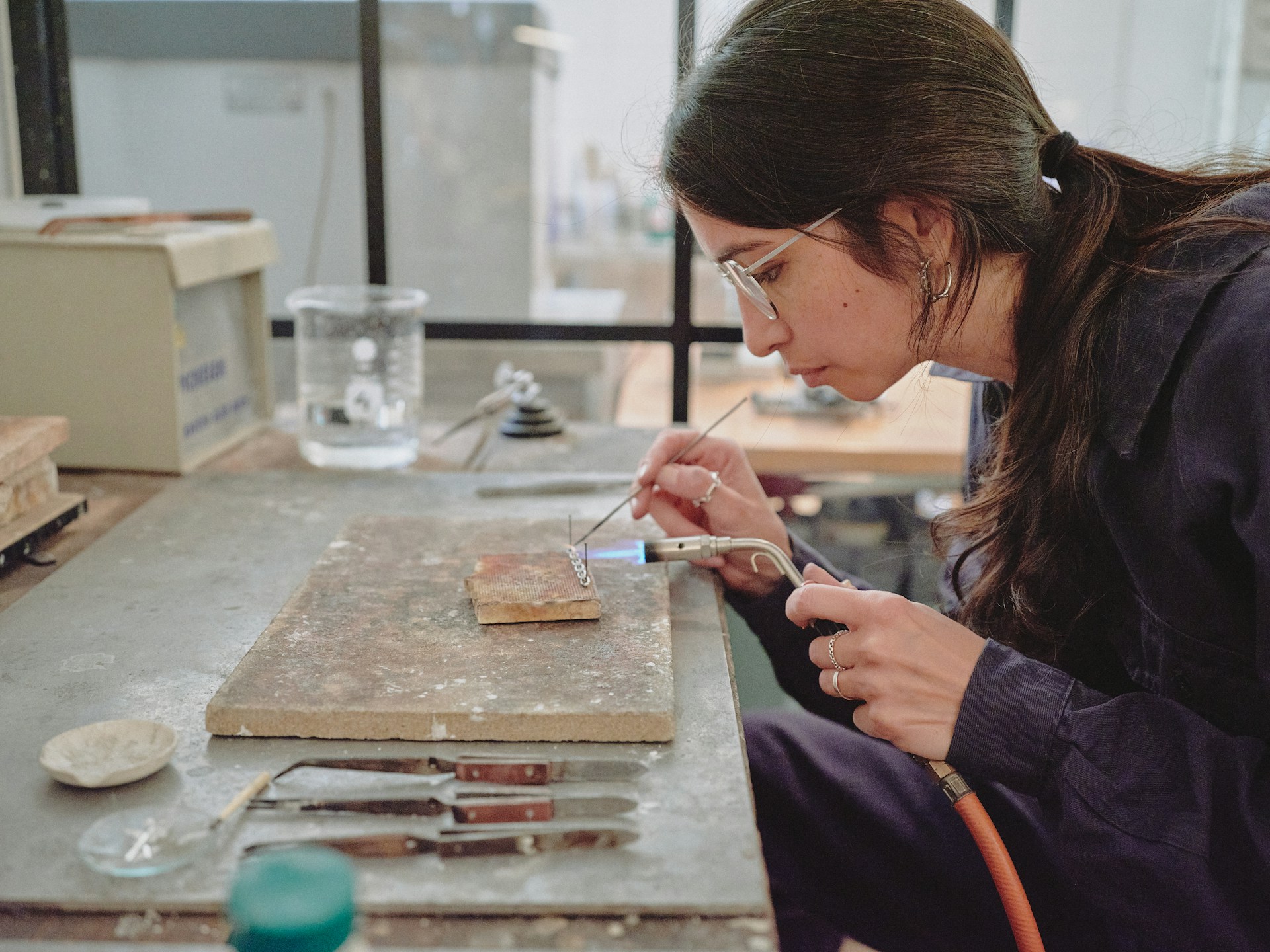
Summer often brings a shift in pace. It’s when people start looking for hands-on experiences that feel both creative and grounded. Goldsmithing classes tend to stand out this time of year, especially across Alberta, where the days stretch long and leave room for new skills to take root.
These classes offer more than tool handling. They’re a chance to understand jewellery in a fuller way, how it sits on the skin, how it moves with the body, and how it fits into everyday life. Goldsmithing is as much about learning to feel and think like a maker as it is about technique. The experience builds slowly through touch, design intuition, and thoughtful habits that outlast the course itself.
Learning About Materials: Not Just Knowing, But Feeling
Before design even enters the picture, there’s the material. Gold, silver, platinum, they each come with their own personality. In a proper goldsmithing class, you don’t just memorize facts about metals. You work with them directly, shaping and handling them.
- Metals behave differently depending on the weather or what skin they sit against
- Heat, weight, and malleability all change how they respond in your hands
- Some metals feel cooler for summer wear, while others suit heavier winter styles
By working with these materials directly, you begin to get a clearer sense of how a ring should feel or what kind of earring falls more comfortably alongside the jawline. These aren’t things you get from a textbook. They come from repetition, mistakes, and those aha moments when something finally shifts between your hands. Through this repeated hands-on learning, the connection to the metal deepens, and you begin to understand its quirks. Bending silver on a warm afternoon feels different than shaping gold on a cool morning. Those subtle changes become more noticeable as you grow used to the process, and soon you start to predict how each type of metal will react to pressure or heat.
It’s also common to explore how each piece interacts with typical Canadian summer conditions. Does a particular metal tarnish faster during humid spells in Alberta? Will the piece remain comfortable during temperature swings between sunny days and chilly evenings? By spending summer hours in the studio, learners see first-hand how materials adapt, and sometimes even surprise.
Design Thinking in Class: Creating with Meaning
Technique might keep a piece strong, but design makes people wear it. That’s why many goldsmithing classes spend time on design thinking. It’s not just about drawing something beautiful. It’s about knowing what works and why.
- Comfortable designs tend to come from paying attention to how people move
- Simple forms can be harder to get right but often wear best
- Space, scale, and shape all affect how a piece rests or catches light
We talk about how a heavy pendant pulls on the neck in the wrong way or why a ring may feel off even if it fits the finger. Good design lives in those quiet details. Every choice, from curve to clasp, affects whether something gets worn often or sits untouched in a drawer.
Students are encouraged to experiment not only with the look of a piece, but also with the feeling it gives to the wearer. Often, an object may appear attractive when laid out on a bench but only reveals its true nature once put on. The learning process involves moving beyond sketches on paper to building models or prototypes, testing how they feel as daily accessories, and adjusting design details with every iteration. Feedback from instructors and peers, as well as your own reactions, help sharpen the ability to craft items that invite repeated wear and stand out without overwhelming. Being in a supportive setting also prompts questions about what makes a “good” piece: Is it beauty, comfort, or a strong connection to the person who will wear it? In goldsmithing classes, you learn it can be different every time.
Movement and Wear: Building for Real Life
Jewellery doesn’t stay still. It flexes at the wrist, bounces at the collarbone, and gets caught in hair on windy days. Goldsmithing classes that go beyond tools include time to think through how a piece lives once it leaves the studio.
- Certain shapes cling better to the body, reducing snags and shifting
- Settings need to hold during biking, walking, or long summer evenings outdoors
- Pieces that adapt or slide give wearers more options throughout their day
We spend time building items that respond to everyday use. That might mean slimmer profiles for pendants worn under layers, or clasps that can be opened with a dry thumb on a cold morning. In Alberta, where summers can swing quickly between hot trails and cool lakeshore breezes, that adaptability matters.
As learners progress, they realize that jewellery interacts with everything. If you’re out hiking or enjoying one of the many outdoor festivals in Alberta, you want a necklace that won’t easily tangle or break. Goldsmithing classes cover not just what looks good, but what holds up. You’ll discover design features like rotating bails, flexible wires, or hidden safety catches, all developed to make sure a creation stays with its owner across the changing seasons and activities. There is also a focus on sizing, with students learning how to create adjustable pieces, so each design can fit anyone or change with the owner’s evolving preferences. These practical considerations are woven into every lesson, turning each idea into something more lasting and wearable every day.
Studio Practices That Shape Experience
The learning extends beyond tasks at the bench. A good studio reflects real-life schedules, habits, and hiccups. Students get a feel for how long something really takes when the metal won’t quite flow the way they planned.
- Studio heat, lighting, and noise all add to the experience of making
- Small routines around cleaning, layout, and safety make a big difference
- Tool setup influences how ideas flow and how mistakes get fixed
Goldsmithing isn’t a race. Most classrooms aren’t quiet snapshots of perfection either. They’re spaces that hum with ideas, sparks, and sometimes a bit of frustration. That’s where real practice comes through. Not just in a polished piece, but in the rhythms of starting, stopping, and starting again.
Part of the lesson is learning patience, cooling a piece before trying to shape it again, tidying the bench to avoid accidents, or stepping back to observe something from a new angle before tackling the next detail. The shared studio space often becomes a source of ideas and gentle support, as students see one another working through similar problems or celebrating small wins. Lighting and background music can create a mood that shifts how you approach delicate tasks, while the way tools are arranged might affect creativity and the ability to fix problems on the fly. These everyday moments, often overlooked, help foster better makers and long-lasting appreciation for the craft.
What Lasts Beyond the Class
What many people carry forward after goldsmithing classes isn’t just a final project. It’s the build-up of small moments, flipping a bracelet to test comfort, sanding a curve until it rests just right, or setting a stone while holding the breath a little too long.
They come to see jewellery differently. Not just as an accessory, but as something that lives with the person wearing it. They start to notice material choices, how a clasp is placed, or whether a necklace really fits the neck it’s on. It changes how they shop, gift, or make their own.
Hands-on learning helps develop a quiet kind of confidence. A sense of what’s possible and where patience builds good results. For those who go through goldsmithing classes like this, the takeaway goes beyond metals or tools. What they really gain is a better way to see the everyday, more aware, more tuned in, and maybe just a little more curious.
Sometimes, students discover a new appreciation for handiwork. They become more mindful of how a small detail or unexpected imperfection adds character to a handmade piece. Simple acts, such as cleaning a piece properly or storing it safely, now carry more meaning. Classmates become part of the journey, sparking conversations that leave a lasting impression. This sense of camaraderie and observation transforms not only how jewellery is created, but also how it fits into someone’s personal story.
Unlock your potential to create stunning pieces with our immersive goldsmithing classes at Daniel Sommerfeld Jewelry. Each class offers a blend of technical mastery and design intuition, ensuring you leave with a deep understanding of how to make jewellery that lasts. Dive into an inspiring learning environment where Alberta’s unique conditions shape your craftsmanship. Sign up today to start your journey in bringing your own designs to life.