

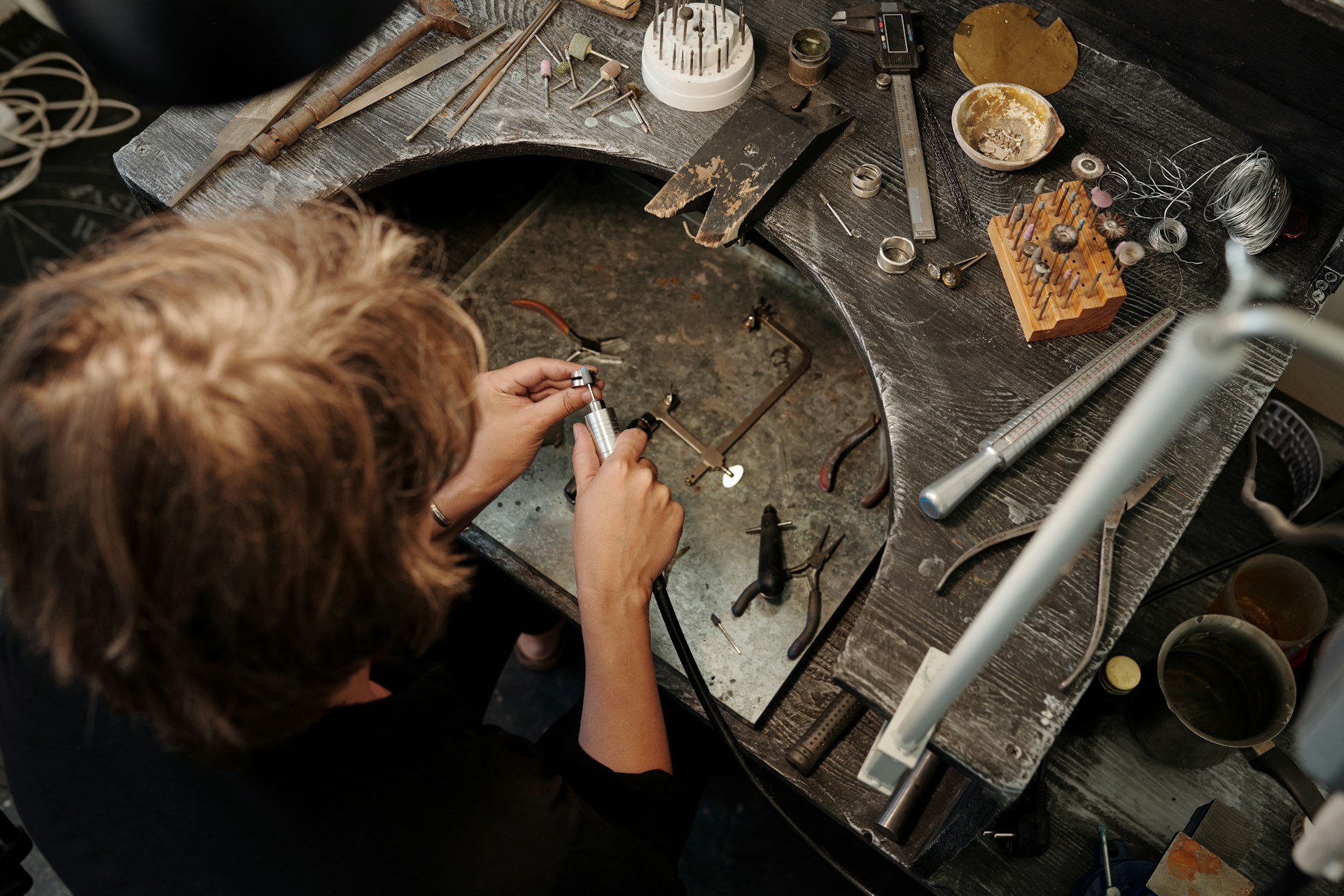
When the temperature rises, metal jewellery behaves differently. In goldsmithing courses, we pay close attention to how summer in Alberta can shift the way we think about materials. From how a ring feels on warm skin to how quickly metal heats in the sun, the season shapes both design and technique.
During the warmer months, students learn to choose metals not just for beauty but for comfort. Some metals are cooler to wear, others cause more skin irritation with sweat or heat. And the way we finish a piece matters too. A high polish, for example, can glare in the sun, while a brushed piece softens that reflection. Warm weather brings small shifts that have a big impact, especially when you’re designing something meant to be worn often.
As students begin to work through designs for summer, they become aware of how the smallest details, such as the structure of the band or the location of contact points on the skin, can make a difference. Jewellery that sits flat and tight in the cold might begin to pinch or press when skin swells in the heat, so starting with a summer mindset adds comfort from the very beginning.
How Heat Influences Metal Choice and Finish
Heat changes more than just comfort. It can affect the look, feel, and longevity of metal jewellery. When you’re spending time outdoors in the sun, a piece that felt perfect in winter may suddenly feel too heavy or too sticky against sweating skin.
Surface finishes become important. Students test how different finishes respond to direct sunlight and daily use:
- A high-polish surface may reflect a lot of light and show smudges quickly
- A matte or satin finish often absorbs more light and feels cooler on contact
- Textured finishes can help mask wear from sweat or sunscreen buildup
We guide students to make side-by-side comparisons between finishes on the same form. They learn quickly that comfort relies on more than design, it’s in the surface feel, how it traps or reflects heat, and how it interacts with skin after hours of wear.
Even the thickness of the finish plays a role. In direct sun, a high-polished ring can quickly become hot to the touch, while a matte or sandblasted finish remains cooler. This difference can mean all-day wear or having to slip off a ring by midday. With practice, students see how the “feel” of a surface directly impacts long-term wearability in the heat, and they begin to plan their designs accordingly.
Learning to Work with Lighter Alloys and Mixed Metals
In summer, heavy metal doesn’t work as well on the body. Softer blends, thinner gauges, and lighter weights are usually more comfortable on skin that’s already warm. So, in summer goldsmithing courses, we often shift focus a bit.
- Thinner sheet and wire allow for airflow and reduce weight without giving up strength
- Students experiment with silver paired with titanium or palladium-blended gold for better temperature control
- Lighter alloys are easier to shape and allow more room for open or airy designs
We introduce techniques that help balance these properties. For instance, students learn how to reinforce thinner sections or add structure with design so the strength stays intact. The goal is to keep things wearable in real heat, when hands swell slightly and metal can press harder into skin.
By evaluating how different metals react throughout a long summer day, students get better at predicting comfort for future wearers. For example, they learn to test layering, mixing metals, and adjusting finishes to prevent pieces from sticking to or overheating the skin. Students can also spot how a single design tweak, like a thinner shank or more openwork, can make day-to-day wear feel much lighter and fresher.
Designing for Movement and Airflow
Jewellery worn in the summer often needs to breathe more. In Alberta, dry heat can make skin feel tight, and anything too snug quickly becomes uncomfortable. That’s why we spend time showing students how to design pieces that allow some give and movement.
- Open bangles or chain-linked bracelets move easily and lift lightly off the skin
- Hoops and drop earrings can float further from the face, keeping things more breathable
- We teach ring sizing with warm-weather changes in mind, like adding subtle curves to widen contact points or choosing inner edges that stay comfortable when fingers swell
Fit and form matter a lot more when living with a piece through weeks of hot, bright days. Too tight, and skin becomes irritated. Too loose, and the piece spins or shifts too much. It’s a balance, and learning how to find that balance takes time on the bench, supported by trial, error, and correction.
Our lessons emphasize how jewellery should adapt, not force the body to do so. When students build open designs and practice flexible connections, they develop an eye for how airflow and small gaps can improve comfort. Looser links and subtle curves help a piece sit right, even after a long day or during an unexpected heatwave. Even clasps get attention, as students test which types are easier to fasten and unfasten with slightly sweaty or swollen hands.
Project-Based Learning with Seasonal Focus
Summer-focused instruction means guiding students through projects that respond to real-life use. We adjust the types of forms and materials we work with so students have a chance to build pieces that would actually be comfortable all season.
- Workshop projects might centre on seasonal needs, like airy pendant forms or lightweight stacking rings
- Students get to test pieces themselves by wearing them around the studio or outdoors between sessions
- We encourage design that reflects local reality, like dry, hot weather patterns in most of Alberta
Real seasonal study means local weather shapes what we teach. For example, in a province where summer can swing from cool mornings to high afternoon heat, students learn to design with those changes in mind. They begin to think about jewellery the way wearers think about their clothing, quick to swap pieces depending on the time of day and activity planned.
By running tests across days and weeks, our project cycles let students adjust. If a ring catches on sweaty skin or a necklace feels hot after time outdoors, there’s a chance to go back, tweak, and improve. That experience develops decision-making skills and an understanding of why a summer piece might need to differ from a winter one.
We also connect seasonal design to personal style. For example, students may note how certain looks, like negative space or minimalist lines, naturally fit warm-weather wardrobes. The result is jewellery that works practically but also feels fresh, modern, and suitable for the season.
When Comfort Guides Craftsmanship
Comfort can be as important as beauty in goldsmithing. Summer doesn’t make things easy, skin reacts fast to material and temperature. That’s why season-aware design becomes a part of how makers grow.
Through these courses, students learn how heat shapes metal and how metal can work with, not against, the body. These are lessons that influence the way we think about jewellery all year round. If a design feels better on a hot day, chances are it feels better in general. Comfort tends to stick in the hand and in our judgment, shaping how we build and how we teach.
By the end, students have a toolkit not just for jewellery making, but for everyday comfort. The balance between good looks and practical wearability is something that becomes second nature. That same care supports better designs all year, and it’s why so many pieces made in summer-focused workshops stay favourites even when the season changes.
At Daniel Sommerfeld Jewelry, we understand that designing jewelry for the Alberta heat requires thoughtful attention to detail. Our goldsmithing courses offer students the skills to create comfortable and stylish pieces that withstand the summer sun. From choosing the right metals to crafting designs that allow movement and airflow, our courses ensure your creations feel as good as they look. Discover how you can enhance your jewelry-making skills with our expert guidance today.