

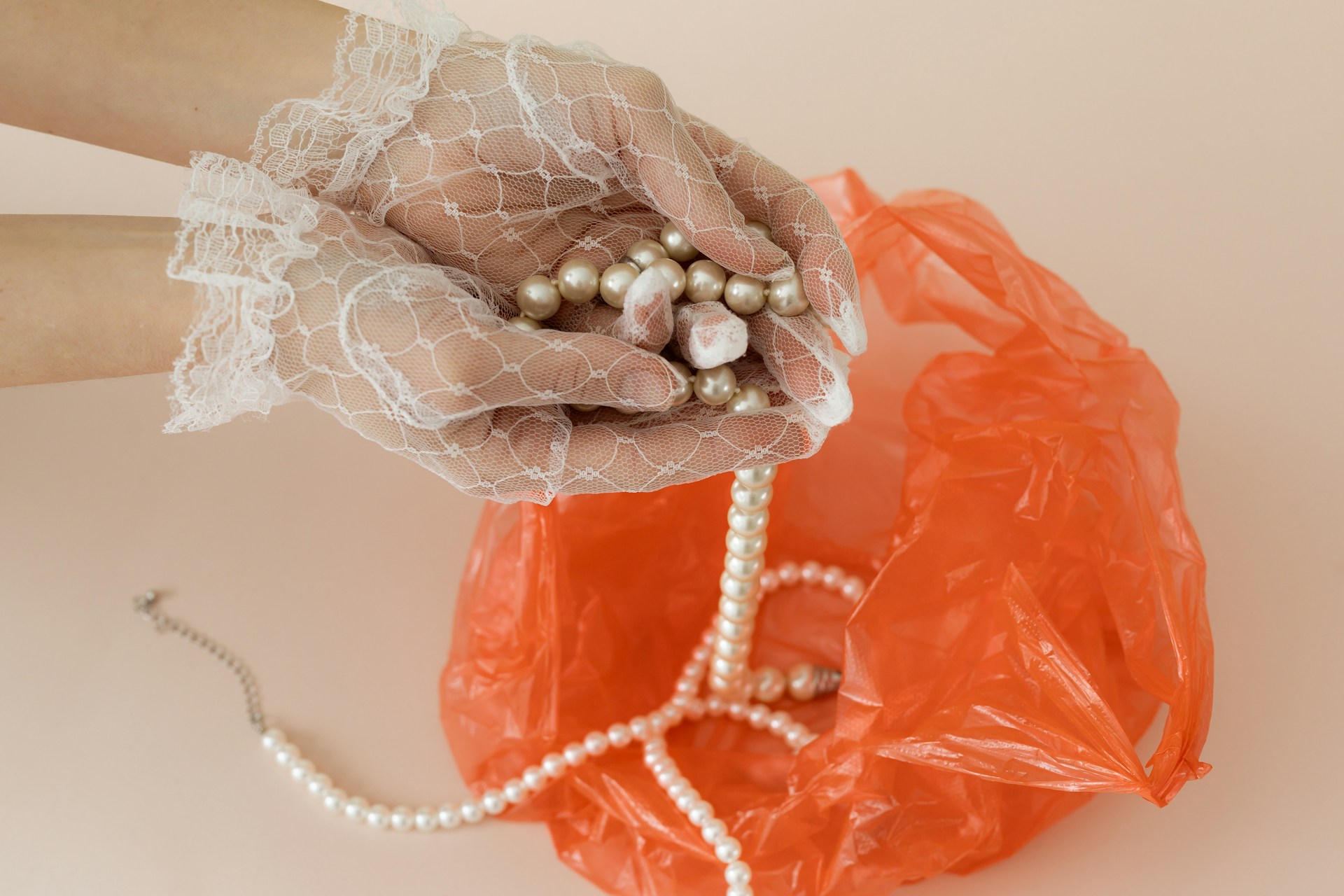
Bridal jewelry with pearls often feels more personal than any other kind. Whether gifted, passed down, or chosen for a wedding day, it carries both emotional and design value. But pearls are different from diamonds and other gemstones. They’re soft, absorbent, and easily affected by things like heat, air, and skin contact.
In Alberta, where dry indoor heat is common during long winters, pearls need some extra attention. They don’t respond well to sudden temperature shifts or air that lacks moisture. Cleaning pearl jewellery safely, especially during colder months, calls for patience and care. Here’s how we approach it.
How Pearls React to Everyday Conditions
Pearls are formed inside living shells, and that natural structure means they’re more reactive than other stones. Their surface is made of layers of calcium carbonate, which makes them both beautiful and fragile.
• Makeup, hair spray, and perfume can stick to pearls, dulling their shine.
• Skin oils soak in slowly, creating buildup over time if not wiped off.
• Dry air can cause the surface to lose moisture, leading to a faded or chalky look.
• Large or quick changes in temperature can stress the pearl’s surface or loosen the setting.
Winter in Alberta tends to create a perfect storm for all of these. Indoor heat dries the air, outdoor cold affects the metal, and layering up with fabric means more friction against a necklace or earring. That’s why we suggest adding small daily habits that keep damage from building up.
If you wear pearls often, you might notice how they change depending on the weather or your home’s heating. While pearls are prized for their luminous finish and gentle glow, they are also sensitive to changes in their environment. When they are worn directly against the skin, they absorb a bit of oil and moisture over time. But in dry weather, especially in heated homes, they give up some of that moisture and may start to look less vibrant. So, keeping track of when and how you wear your pearls can help you spot early signs of dullness or dryness.
What to Avoid When Cleaning Pearl Jewelry
When it comes to keeping pearl jewellery clean, less is always better. Harsh cleaners, scrubbing, and total submersion can cause more damage than they fix.
• Do not use ultrasonic machines or commercial jewellery dips, even if they are marked safe for gemstones.
• Avoid vinegar, bleach, alcohol, or anything with ammonia. These can eat away at the pearl’s outer layer.
• Never soak knotted strands. The thread may stretch or even rot if it gets too wet.
• Do not use brushes or cloths with rough weaves. Friction scratches easily.
• Avoid storing or cleaning pearls near strong heat. That includes leaving them close to a heating vent or trying to dry them near a radiator.
Cleaning mistakes often come from good intentions. What works for gold or diamonds usually does not work for pearls. The safest approach is simple and careful.
Pearls have a unique surface that can easily be harmed by chemicals and rough treatment. Even rubbing too hard with a towel can cause faint lines on the outer layer. Since pearls are made layer by layer, a small scratch can sometimes remove just enough of the surface that the shine changes. Avoiding everyday mistakes helps keep your bridal jewellery looking the way you remember it.
How to Clean Bridal Jewelry with Pearls Safely at Home
If a piece just needs regular care, a gentle cleaning at home can help it look better right away without risk. That’s especially useful in the winter when buildup from indoor air and lotion is more common.
Here’s what we recommend:
1. Use a soft microfiber cloth or old cotton T-shirt to remove surface dust and oils before adding moisture.
2. Mix a small amount of non-fragrant, mild soap with warm water. Dip the cloth lightly, do not soak it.
3. Wipe each pearl gently, holding the piece steady with your other hand. Focus on one area at a time.
4. Wipe down any metal settings separately and avoid getting moisture near the base of glued or threaded pearls.
5. Lay the cleaned piece flat on a dry towel. Do not hang it to dry. Let it sit until both the pearls and string are fully dry.
We avoid using tap water when it has high mineral content. Clean, low-mineral water is best for wiping pearls. Leaving the cleaned pearls flat gives the string or adhesive time to reset safely.
Try to make pearl cleaning a part of your weekly or monthly routine, depending on how often you wear your jewellery. Gentle maintenance keeps pearls looking fresh and also prevents long-term buildup that can be trickier to remove later on. If you keep up with small cleanings, you may never need to deal with a deep clean or repairs.
When to Leave It to a Professional
Some pieces are too detailed or delicate to handle at home. If you’re worried about wear or see visible movement in any part of the piece, it is best to let us take a closer look.
Here’s when we usually recommend bringing it in:
• The setting feels loose or you notice movement in the prongs.
• There is cracking, flaking, or visible dark spots near one or more pearls.
• The piece combines pearls with other gemstones, especially with fine engraving or antique work.
• The metal looks discoloured or the clasp no longer feels secure.
• There is any sign the glue has dried out or the string is stretched unevenly.
• After a stretch of especially cold weather, the metal around pearls may show signs of tightening or cracking.
Alberta winters can strain jewellery in subtle ways, especially for older pieces. We always inspect for setting shifts before and after cleaning during colder months.
Taking pearl jewellery to a professional isn’t just about fixing major problems. Even if a piece looks perfect, there might be hidden strain in the string or the setting, especially after a long winter. Having an expert look things over once a year helps prevent small problems from turning into big repairs. It’s also worth it for pieces you plan to wear for important events, such as anniversaries or family celebrations.
Keeping Pearls Beautiful Long-Term
Pearl jewellery will not stay flawless forever, but small habits go a long way in slowing down wear. The key is storing and wearing each piece in a way that protects its natural surface.
Here’s what helps:
• Store pearl jewellery flat inside a fabric-lined box or pouch. Avoid plastic containers.
• Keep them away from direct sunlight, extreme cold, or heating vents.
• Wear the piece after applying makeup or hair products, not before.
• Wipe with a soft, dry cloth each time you put them away.
• Avoid wearing pearl pieces for long stretches during outdoor winter sports or active events.
Pearls benefit from gentle use. Letting them rest between wears gives fibres time to bounce back and keeps buildup from settling in.
If you move pieces around often, it is better to wrap each one in a separate pouch or soft cloth. It does not take a lot of contact to create dull spots or light scratching on a pearl’s surface. Paying attention to where and how pearl jewellery is stored is one of the easiest ways to keep bridal pieces looking their best. Try not to stack pearl jewellery on top of heavier items since weight can flatten or deform delicate pearls or threads.
Designed to Last for Life’s Big Moments
We hand-fabricate each piece, using experience with delicate stones such as pearls and carefully selected metals for secure settings. We are known for creating custom wedding jewellery that balances practicality with elegance and offer repairs as well as guidance for long-term care.
Preserve the beauty and significance of your bridal jewelry with pearls by considering the expert care and craftsmanship at Daniel Sommerfeld Jewelry. With our guidance, keep your treasured pieces stunning and ready for any occasion while embracing the unique challenges of Alberta’s climate. Our custom designs are thoughtfully created to marry elegance with practical wear, ensuring your jewelry makes every moment unforgettable. Let us help protect your jewelry’s lasting luster for all of life’s special events.